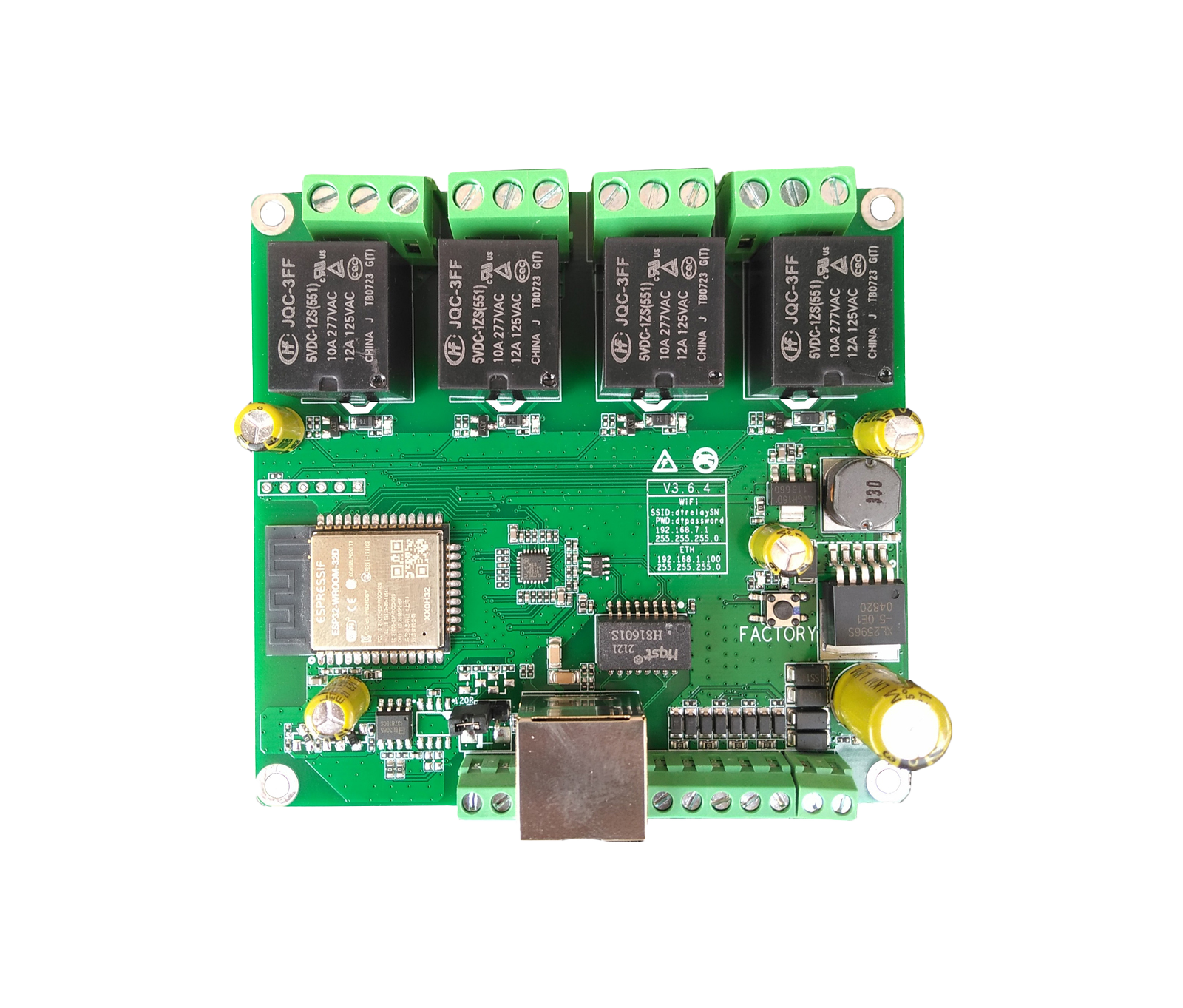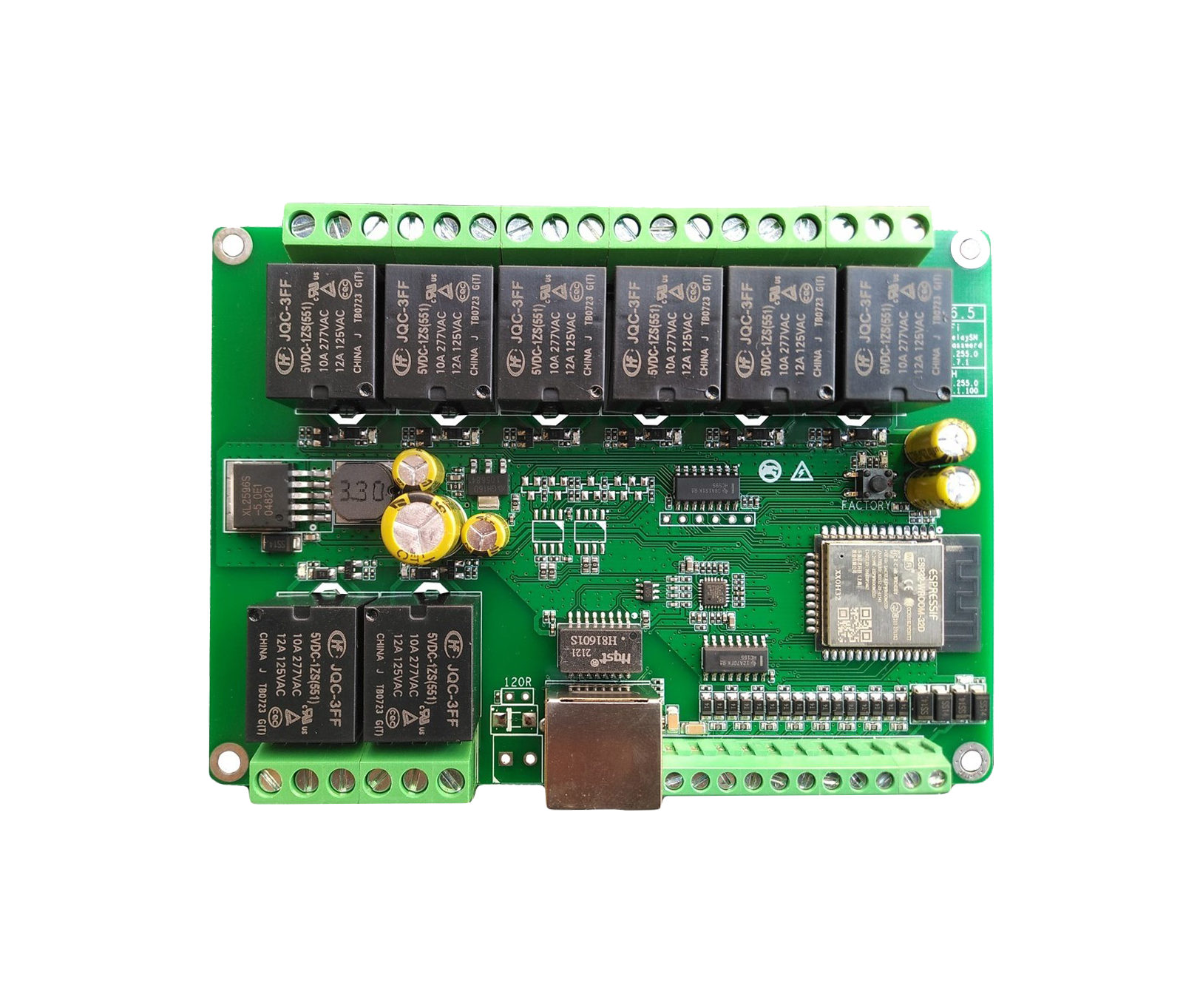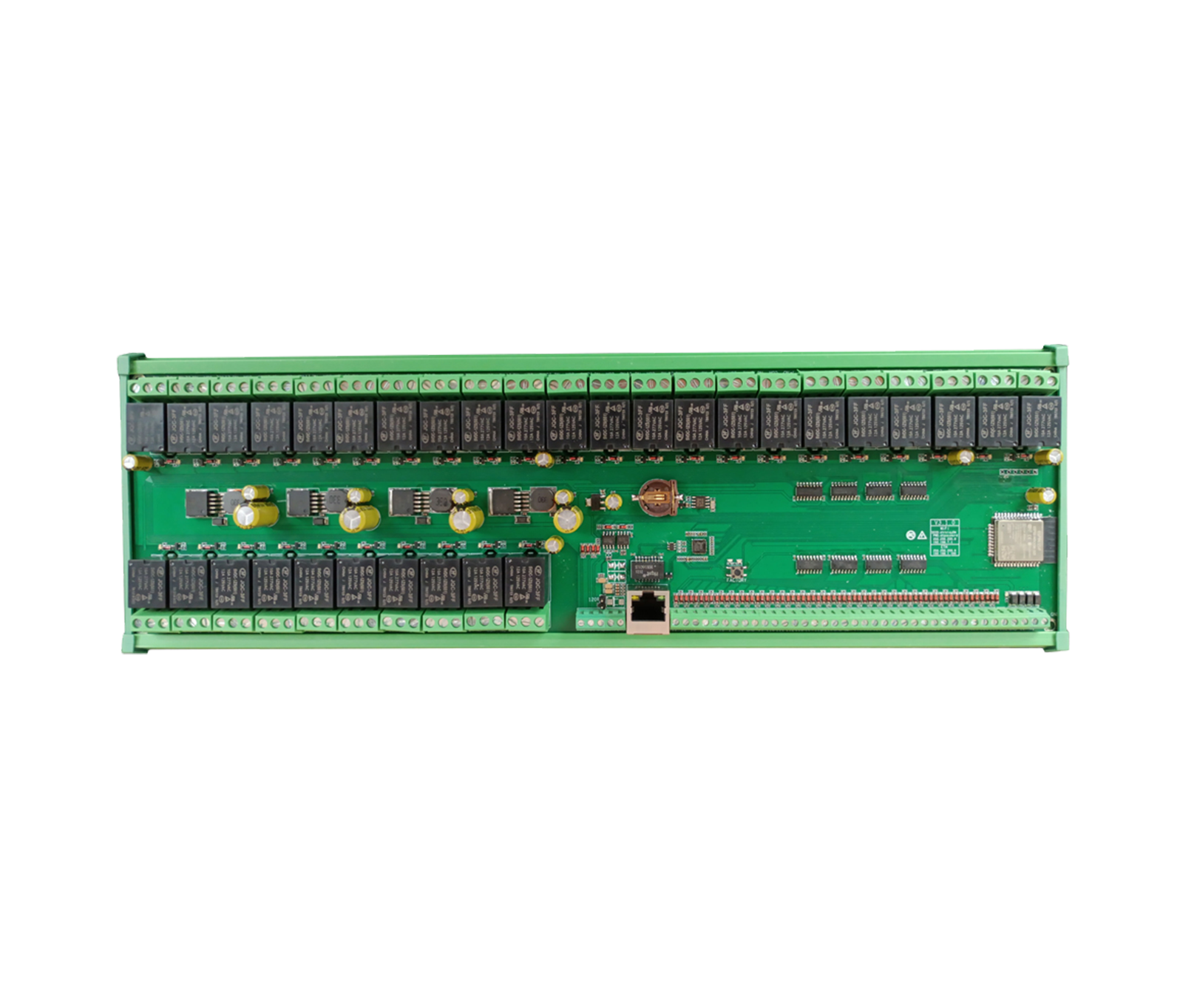
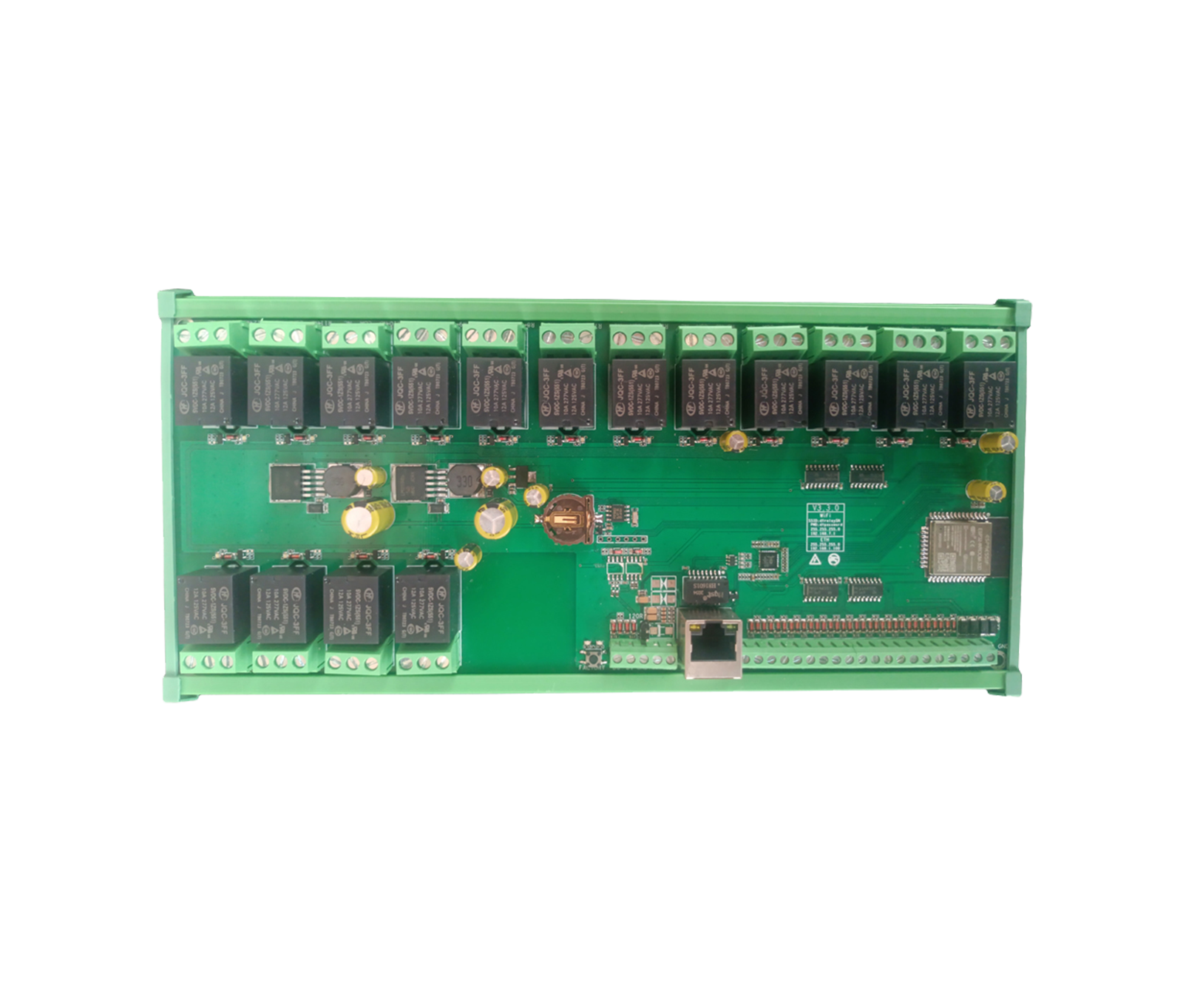
The KD-R016 smart relay module from the Iridium series is an advanced 16-channel controller engineered for centralized management of electrical circuits in large automation projects.
Overview
The KD-R016 smart relay module from the Iridium series is an advanced 16-channel controller engineered for centralized management of electrical circuits in large automation projects. With 16 relay outputs, 16 digital inputs and one Wiegand input channel, it enables comprehensive control of lighting and access control systems. Network and serial communication ports, support for industrial protocols such as Modbus and MQTT, and a standard design for installation in electrical panels together ensure that the module runs reliably over the long term.
Interfaces & I/O
- Relay Outputs
(DO) - 16 Channels
- Digital Inputs
(DI) - 16 Channels
- Network Interface
-
RJ45 Ethernet (10/
100M) - Wireless Interface
- WiFi (AP + STA Modes)
- Serial/
Bus Interfaces - CAN, RS485
- Wiegand Input
- 1 Channel
Functions
- Features
- Input Mutual Control, IP Watchdog, NTP Client, Task
- Real Time Clock
- Optional
Network & Protocols
- Supported Protocols
-
CoAP
HTTP GET CGI
Modbus-RTU/
TCP/ MQTT TCP UDPUDP/ ASCII - Home Automation
- Domoticz, Home Assistant, openHAB, Red-Node
General
- Operating Voltage
-
12/
24VAC, 12/ 24VDC - Power Consumption
- 9W
- Recommended Adapter
- 12VDC / 2A
- Board Dimensions
- 250 x 107 mm
- DIN Case Dimensions
- 252 x 123 x 43 mm
Downloads
Documentation
-
KD-R016
Compare products
Compare this product with similar products
Please wait
Frequently asked questions: Smart Home
Answers to common questions about this product line, from the KDT Help Center.
Can smart home systems be integrated with other equipment?
If a common protocol, API, SDK or standard is available, integration can be explored. The details need to be confirmed for the exact models involved.
Where should I start when choosing the right smart home system?
Start by defining the intended use, the number of devices, the installation environment, the capacity required and your plans for future expansion. Then choose the model and technical specifications based on what the project actually needs.
Which technical specifications matter most for smart home systems?
Depending on the project, the most important specifications are capacity, speed, compatibility, environmental ratings, management features and scalability. Basing your choice on a single figure is usually not enough.
Is a cheaper smart home system model always the right choice?
No. The purchase price is only one factor. You also need to consider reliability, features, service life, after-sales service and maintenance costs.
How do I work out how much capacity a smart home system needs?
Base the calculation on the number of devices, actual usage, how long the system will be in use and how much the project is likely to grow. It is also wise to keep some capacity in reserve.
Didn’t find your answer?