
5MP Thermal Vision Smart Dual Light Fixed Turret Camera
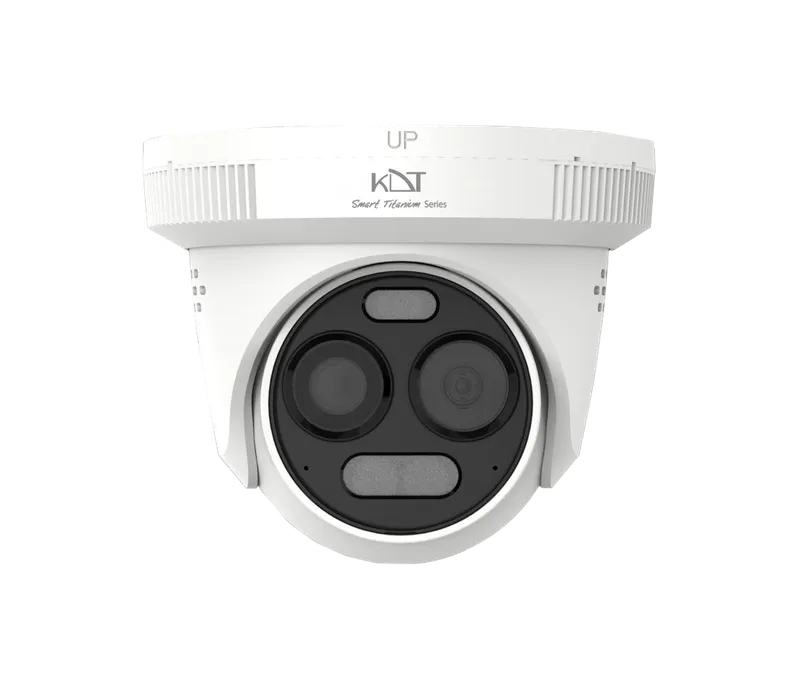
The KI-TVD35ST50F-i30TSMPUR bi-spectrum turret IP camera from the Smart Titanium series brings the most advanced thermal and visible imaging capabilities together in a compact, easy-to-use turret design.
-
 Illumination
Dual Light
-
 Function
Dual Microphone
-
 Illumination
Red & Blue Light
Angle of view
Visible lightHorizontal 91.5°Vertical 46.1°Diagonal 132°
ThermalHorizontal 24.8°Vertical 18.7°
Calculate coverageOverview
The KI-TVD35ST50F-i30TSMPUR bi-spectrum turret IP camera from the Smart Titanium series brings the most advanced thermal and visible imaging capabilities together in a compact, easy-to-use turret design. Its thermal sensor continuously monitors ambient temperature and detects early signs of fire and smoke. Alongside it, the optical module with dual-light night vision captures every visual detail of the scene in high resolution. Together, these two powerful technologies make it an unmatched product for proactively protecting and securing server rooms, warehouses and indoor industrial spaces.
Optical Module
- Image Sensor
- 5MP Progressive scan Cmos Sensor (1/2.7”)
- CPU
- Dual-Core ARM Cortex
- Resolution
- 2880*1620 (5MP)
- IR Range
- 30~40 m Smart IR SMD Technology, 30 m Warm Light Technology, Dual Light Technology
- Warm Light
- Up to 30m
- Day /
Night Filter - IR Cut Filter With Auto Switch
- Min Illumination
-
Color: 0.005 lux
(AGC on) - B/ W: 0.0 Lux (IR on) - Night Vision
- Dual Light Technology
Thermal Module
- Image Sensor
- Vanadium Oxide Uncooled Focal Plane Detector
- Resolution
- 256*192
- Pixel Pitch
- 12μm
- Spectral Range
- 8~14μm
- NETD
- ≤50mK@25°C, F#1.0
- Focal Length
- 3.2mm
- IFOV
- 1.69mrad
- Field of View
- 24.8°×18.7°(H×V)
- Aperture
- F1.1
Picture Adjust (Thermal)
- Color Palettes
- Up to 20 colors (White-hot, Black-hot, Rainbow, High Contrast Rainbow, Iron red, Lava, Sky, Medium Gray, Gray Red, Violet Orange, Ice Fire, Cyan Red, Special 1, Special 2, Gradiant Red, Gradient Green, Gradient Blue, Warning Red, Warning Green, Warning Blue)
- FFC Control
- Manual
Video/Audio
- Video Compression
-
H.264+
(Ultra H.264), H.265+ (Ultra H.265), MJPEG (Sub) - Audio Compression
- ACC, G.711a, G.711u, G.726, PCM
- Frame Rate (60 Hz)
-
30fps@ 5MP
(2880*1620) 30fps@ 4MP 30fps@ 2MP@ 30fps - Transmission Stream
- Triple Stream (Video Bit Rate:11 Kbps~10 Mbps)
Video/Audio (Thermal)
- Main Stream
- 20fps (1280 × 720, 704 × 576, 640 × 512, 320 × 240)
- Sub Stream
- 20fps (704 × 576, 640 × 512, 320 × 240)
Active Deterrence
- Red/
Blue Light Warning -
Flash: 5 s–30 s; frequency: high/
medium/ low - Sound Warning
-
Audio 1/:25 s–30 s; 106 dB /
3; Volume: high/ medium/ low
Functions
- Recording
- ANR, CMS, FTP, NAS, NVR, SD Card, VMS
- Record Type
- Manual, Motion Detection, Schedule, Smart Detection
- Alarm Triggers
- All Intelligent Functions
- Event Action
- Buzzer, Email, Pop up, PTZ, Recording, Show Message, Snapshot
- Event
- Smart Motion Detection Video Shelter
- Intelligent Functions
- 7 Smart Function Line Crossing Detection Area Intrusion Detection Region Entrance Detection Region Exiting Detection Loitering Detection Face Detection Smoke and Flame Detection
Interfaces
- Network
- 1 RJ45 (10M / 100M) Ethernet Port
- External Audio
- Audio in, Audio Out
- Internal Audio
- Dual Internal Mic, Internal Speaker
- Alarm
- Alarm In, Alarm Out
- Serial Port
- 1*RS-485 interface (half duplex)
- Power
- DC In, PoE LAN
- Reset Button
- Yes (Optional)
- Memory Slot
-
Yes - Micro SD/
SDHC/ SDXC Slot (512Gb Max) (ANR Support)
Guarantee
- Product Guarantee
- 5 Years Gold Guarantee
- MTBF
- 100K hrs min. MIL-HDBK-217F (25°)
- Certificates
- CFR, CN, EN, FCC
Lens
- Lens Type
- Fixed
- Focal Length
- 4 mm @F1.6
- Angle of View
- D-FOV: 132°, H-FOV: 91.5°, V-FOV: 46.1°
DORI Distance
- DORI
- Detect:56m Observe: 22m Recognize: 11m Identify: 5.6m
Effective Length (Thermal)
- Human
(1.8m × 0.5m) - Day Mode: 20 ~ 25 m (Corridor Mode: 15 ~ 20 m) Detection: 194m, Recognition: 49m, Identification: 24m Night Mode: 15 ~ 20 m (Corridor Mode: 10 m)
- Vehicle
(4.0m × 1.4m) - Day Mode: 40 ~ 50 m - Night Mode: 20 ~ 45 m" Detection: 544m, Recognition: 136m, Identification: 68m
- Safety Analytics
- Fire Point Detection: 40 m (Default) ~ 80 m (Max Sensitivity) Smoking Detection: 6 m (Default) ~ 9 m (Max Sensitivity)
Picture Adjust
- Picture Function
-
120dB WDR, 2D/
3D DNR, BLC, HLC, ROI, Rotate - WDR
- 120dB
- Shutter Speed
- Auto Manual (1/3 ~ 1/100,000)
- Image Parameter Control
- Off On Timing (Adjust 0~255)
- D/
N Control - Auto, Color off, Color on, Timing
- S/
N - > 56dB
- Image Parameter
- Anti Flicker, Brightness, Contrast, Hue, Image Style, Saturation, Sharpness
Network
- Protocols
-
TCP/
IP (V4, V6), ICMP, HTTP, HTTPS, FTP, DHCP, DNS, DDNS, RTP, RTSP, RTCP, NTP, IGMP, UPnP, SMTP, UPnP-TM, P2P - Compatibility
- Onvif Ver2.6 (Profile S, G, T) SDK
- Streaming Method
- Multicast, Unicast
- Web Viewer_Thermal
- Chrome, Edge, Firefox, IE
- Smart Device
- IOS Android Phone & Tablet
Thermal Functions
- Temperature Range
-
Selectable between -20°C to 150 °C
(-4 °F to 302 °F) and 100 °C to 550 °C (212 °F to 1022 °F) - Temperature Accuracy
- ±2 °C (±14.4 °F) or ± 2%
- Intelligent Function
- Smoke Detection, Fire Spot Detection, PPHV, Loitering
General
- Protection Rating
- 6KV Surge Protection, IP67
- Power Supply
- DC12V ± 25%
- PoE Supply
- IEEE802.3af - Max 9.3 Watt
- Web Language
- English, Persian
- Dimensions
- 105*270 mm
- Weight
- 1.2 Kg
- Operating Humidity
- Humidity 95% or less (non-condensing)
- Operating Temperature
-
-40°C ~ +
60°C
Downloads
Documentation
-
KI-TVD35ST50F-i30TSMPUR
Compare products
Compare this product with similar products
Please wait
Frequently asked questions: CCTV Cameras
Answers to common questions about this product line, from the KDT Help Center.
Which resolution should I choose: 2 MP, 4 MP or 8 MP?
Choose by the pixel density you need on the target, not by the megapixel number alone. 2 MP is 1920×1080, 4 MP is usually 2560×1440 (some models use 2688×1520) and 8 MP is 3840×2160, and with the same lens the pixels per metre grow in proportion to the horizontal pixel count. With a 90° lens, for example, a face reaches the identification density of 250 px/m at about 3.8 m with 2 MP, 5.1 m with 4 MP and 7.7 m with 8 MP. As a starting point, 2 MP is enough for a single doorway or a small room, 4 MP suits most shops, offices and yards, and 8 MP pays off in wide open areas or when you want to zoom into recordings, at the cost of a higher bitrate and a little more noise at night.
Is an 8 MP camera four times sharper than a 2 MP camera?
Not exactly: 8 MP (3840×2160) has four times the pixels of 2 MP (1920×1080), but only twice as many across the width and twice as many in height, so at the same distance and field of view you get twice the pixels per metre, not four times. The extra pixels only help if the lens is sharp, the focus is correct, there is enough light and the bitrate is high enough to keep the detail. That is why 8 MP is worth choosing when you need the extra reach or the ability to crop into the picture, and not simply because the number is bigger.
Why can a higher-resolution camera look noisier at night, and do sensor size and F-number matter?
On the same sensor, more pixels means smaller pixels: an 8 MP pixel has only a quarter of the area of a 2 MP pixel, so it collects less light and shows more noise in the dark. A larger sensor helps: a 1/1.8 inch sensor has about 1.9 times the area of a 1/2.8 inch one (the fraction is a legacy naming convention, not the real size). The lens aperture matters just as much, because the light reaching the sensor is inversely proportional to the square of the F-number: an F1.0 lens admits about 2.6 times more light than F1.6 and 4 times more than F2.0. For dark scenes, compare resolution, sensor size and F-number together instead of looking only at the megapixel count.
What is a starlight camera, and what does a figure like 0.005 lux mean?
“Starlight” has no formal standard: manufacturers use it for cameras with a fast lens (often F1.6 or faster) and a low-noise sensor that still give a usable colour picture in very little light, usually 0.01 lux or less on the datasheet. The lux figure is measured under favourable conditions (widest aperture, maximum gain, slow shutter), so a picture at that light level is dark and noisy and moving objects blur. For comparison, a full moon gives about 0.05 to 0.3 lux and a moonless clear night about 0.002 lux. Compare datasheet values only when the test conditions are the same, and judge a camera on a live picture of your own scene.
What is a full-colour night camera, and how is it different from infrared (IR) night vision?
An infrared (IR) camera switches to black-and-white at night and lights the scene with invisible IR LEDs, while a full-colour camera keeps a colour picture at night by combining a very sensitive sensor and a fast lens with a visible warm or white light. Colour helps you describe clothing and vehicles, and a visible light can also deter intruders, but it is not covert and it lights up the area. Dual-light models combine both and switch between IR and warm light automatically or by schedule. Depending on the model, KDT datasheets list a warm-light range of about 20 to 90 m and, on dual-light models, an IR range of about 40 to 80 m.
Didn’t find your answer?
Warranty
5-Year Gold Warranty
This product comes with the official KDT warranty. Check your device’s warranty status with its serial number.
Check warrantyRelated products
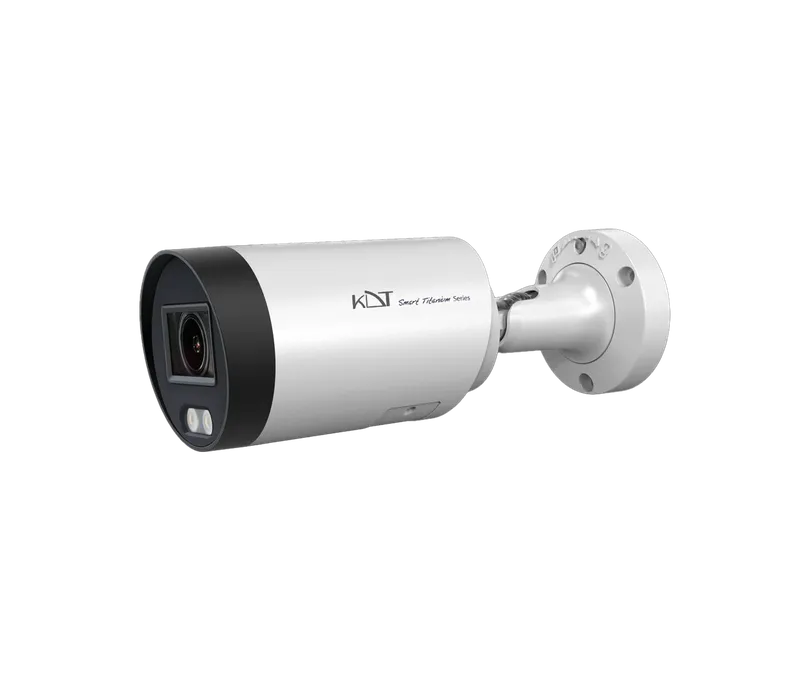 4 MP Full Color Fixed Bullet CameraKI-B35ST40F-TCSM
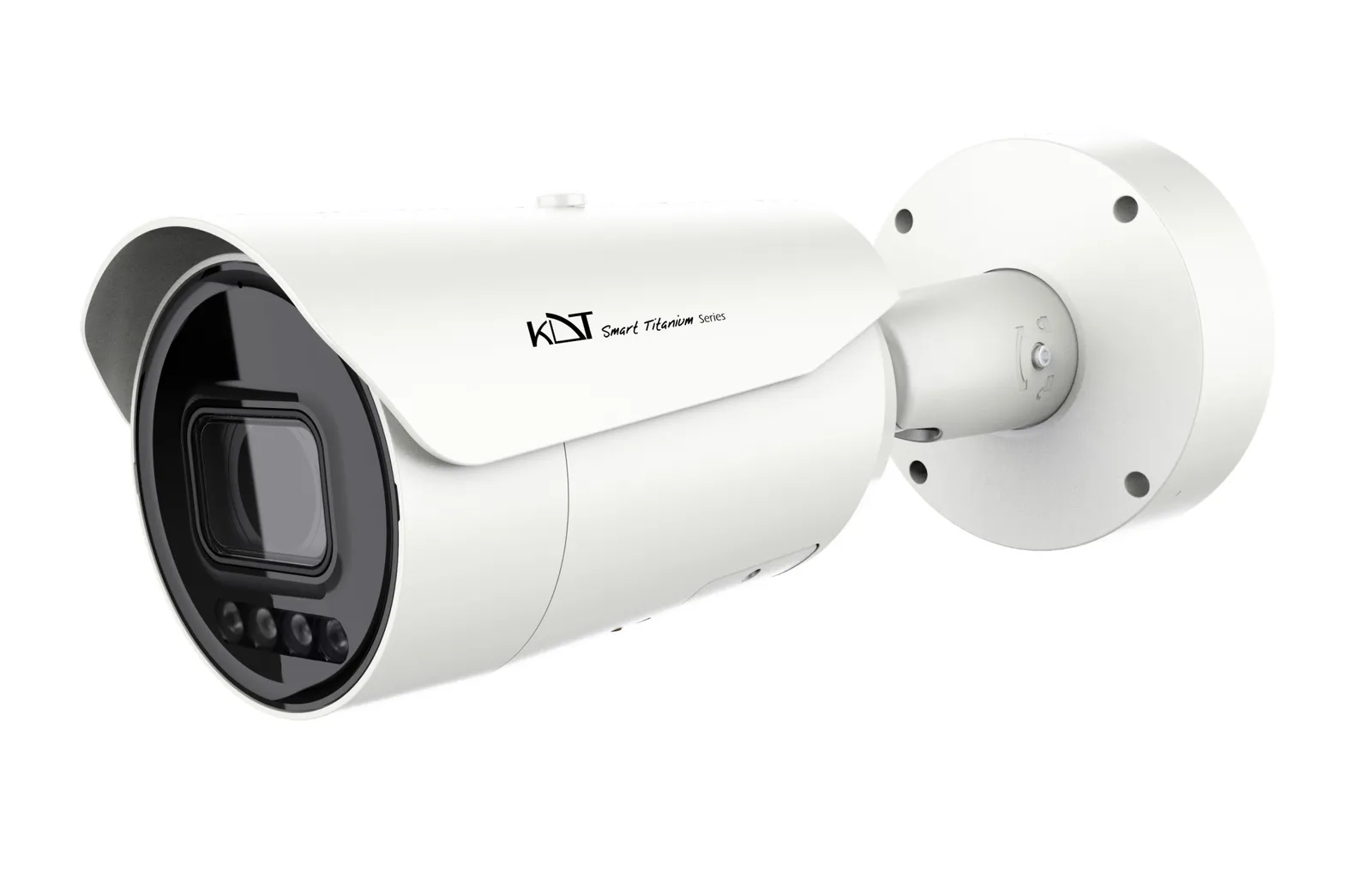 4MP Full Color Motorized Bullet CameraKI-B85ST40A-TCSM
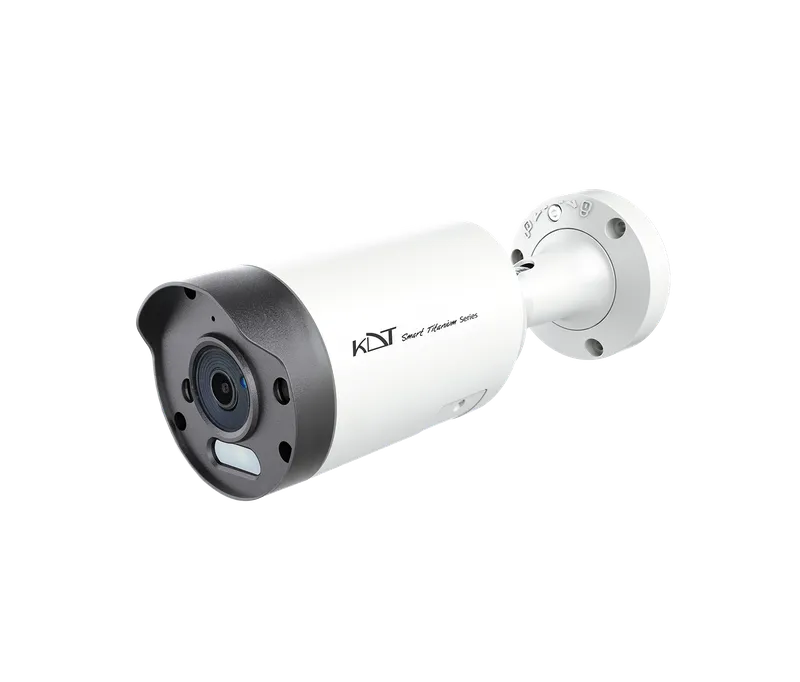 6 MP Smart Dual Light Fixed Bullet CameraKI-B35ST60F-i40TSMU
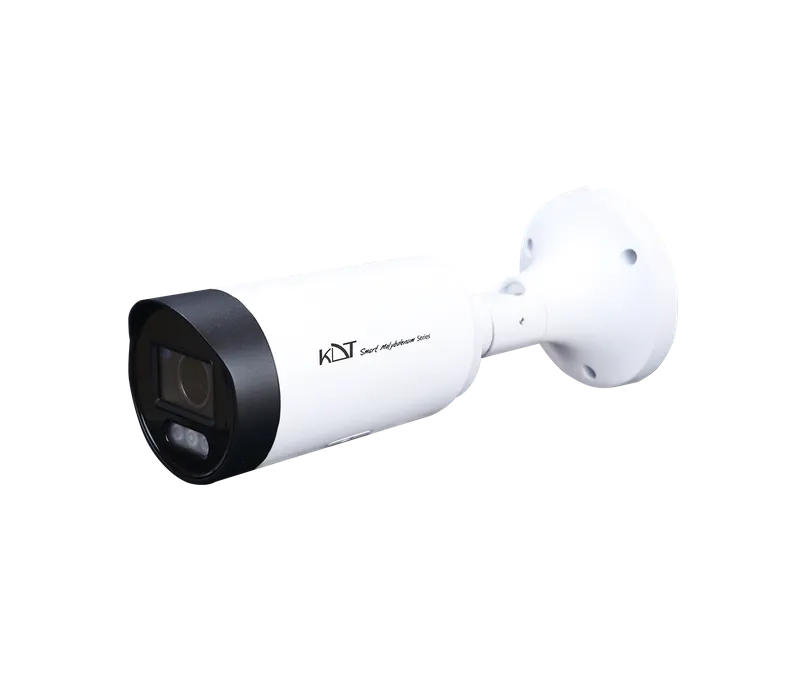 6MP AI ISP Smart Dual Light Motorized Bullet CameraKI-B55ST60A-i70TSMU
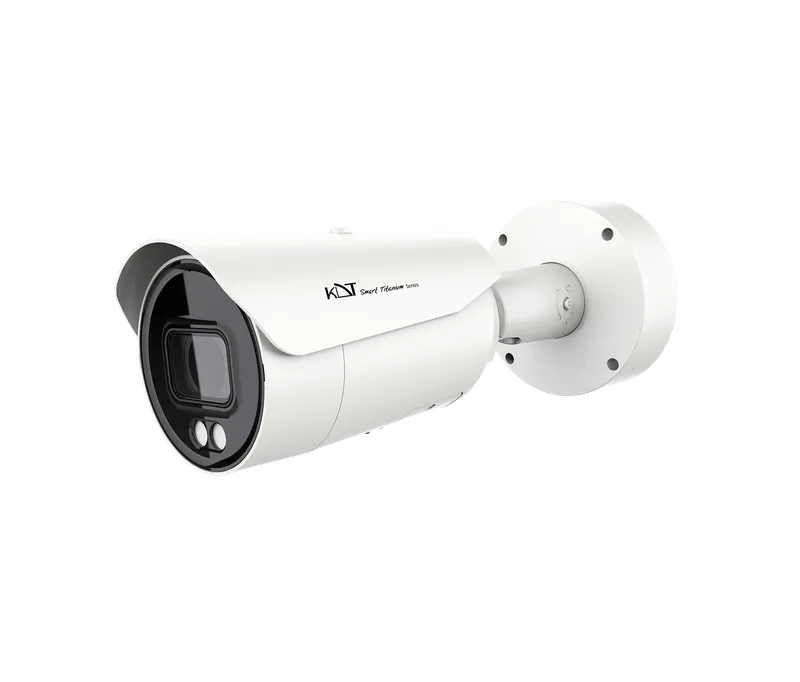 6 MP IR Motorized Bullet CameraKI-B85ST60A-i100TSMR
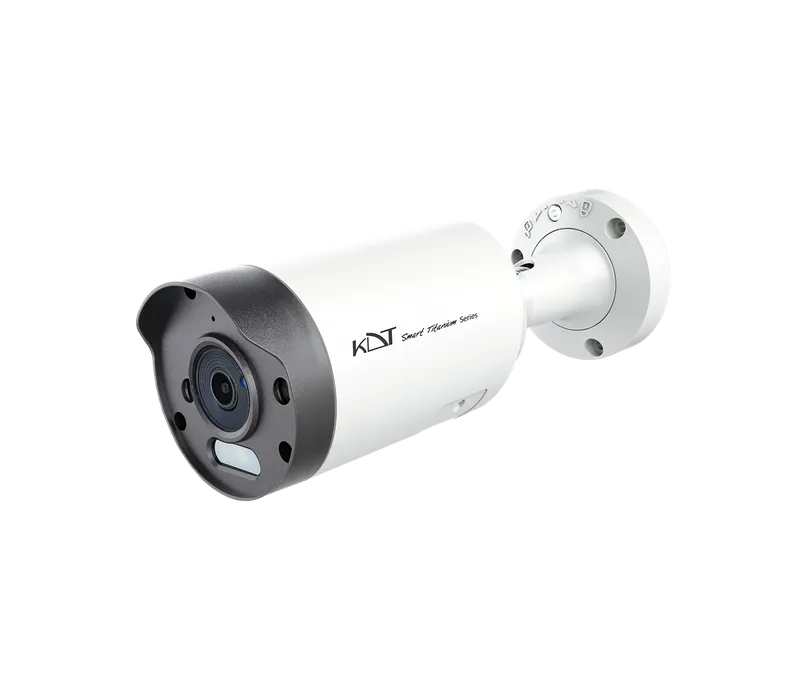 8 MP Smart Dual Light Fixed Bullet CameraKI-B35ST80F-i40TSMU
 8MP AI ISP Smart Dual Light Motorized Bullet Network CameraKI-B55ST80A-i70TSMU
 8MP Active Deterrence Motorized Bullet CameraKI-B55ST80A-i70TSMPUR
 6 MP Smart Dual Light Fixed Dome CameraKI-D15ST60F-i30TSMU
 6MP AI ISP Smart Dual Light Motorized Dome CameraKI-D25ST60A-i50TSMU
- 8MP Smart Dual Light Fixed Dome CameraKI-D15ST80F-i30TSMU
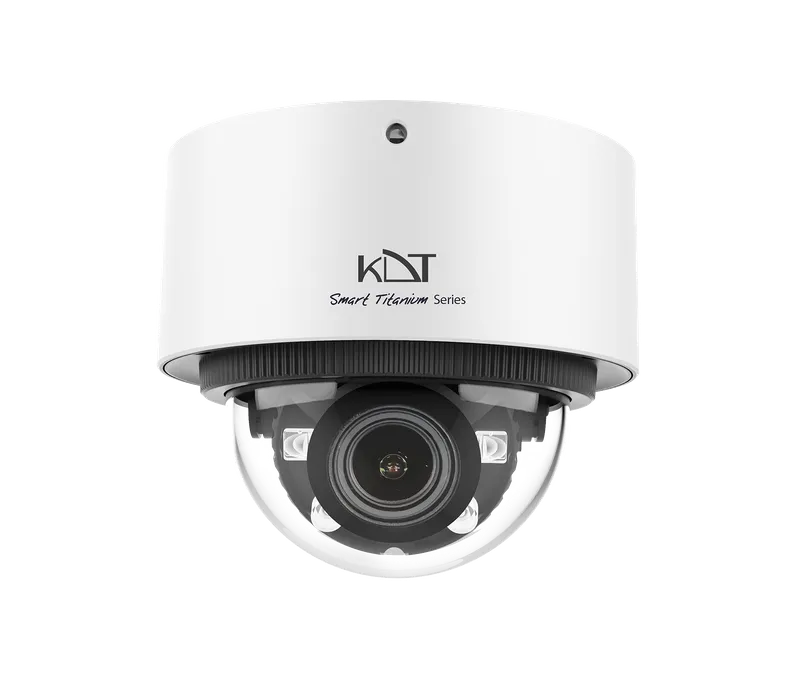 8 MP AI ISP Smart Dual Light Motorized Dome CameraKI-D25ST80A-i50TSMU