
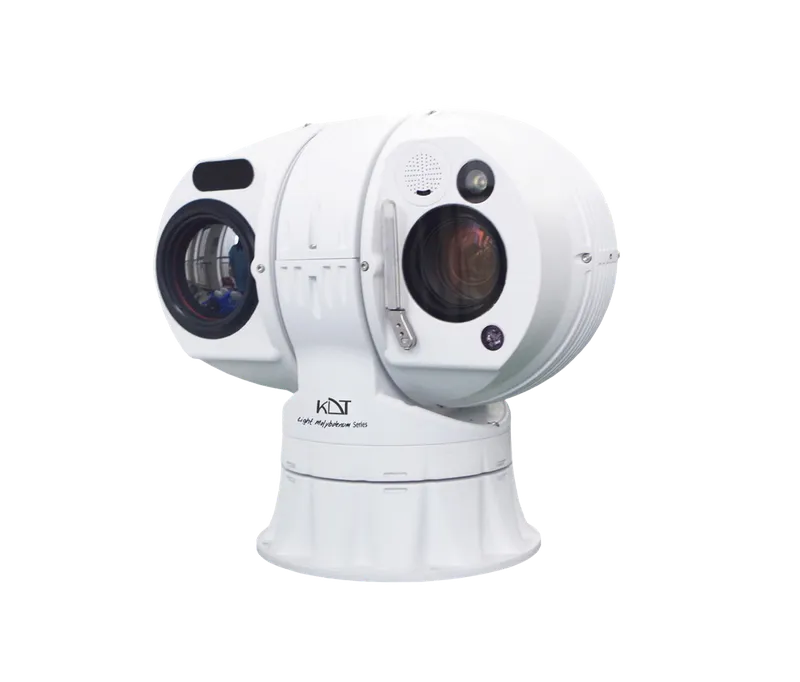
The KI-TDV430LM80A-SW bi-spectrum positioning IP camera from the Light Molybdenum series is KDT's most advanced and capable surveillance solution for monitoring strategic areas.
-
 Function
Smart Tracking
-
 Illumination
IR
-
 Video Compression
Ultra H.265
Overview
The KI-TDV430LM80A-SW bi-spectrum positioning IP camera from the Light Molybdenum series is KDT's most advanced and capable surveillance solution for monitoring strategic areas. This powerful integrated system mounts an optical camera with an impressive zoom alongside a thermal camera with a varifocal lens on a high-precision rotating platform (PTRZ), delivering visible and thermal images simultaneously at very long range. Full rotation and highly precise position control allow flawless target tracking in the harshest weather and in total darkness. This specialized camera is an unrivaled choice for protecting borders, ports, airports and critical infrastructure.
Visible Camera
- Sensor
-
Integrated ICR Dual Filter D/
N Switch (1/2.8") Star Level CMOS - Resolution
- 3840x2160 (8MP)
- Frame Rate
- 60@fps
- Transmission Stream
- 16Kbps~32Mbps. 60Hz
- Min. Illumination
-
0.0005Lux (Color), 0.0001Lux (B/
W)
Thermal Sensor
- Sensor
- 5th Generation Uncooled FPA Sensor
- Resolution
- 640x512
- Frame Rate
- 25@fps
- Pixel Size
- 12µm
- NETD
- ≤45mK
- Spectral Range
- 7.5-14 µm, LWIR
Laser
- Effective Length
- 600m
Image
- Enhance
- Stable Operational Temperature Without TEC Starting Time Less Than 4 Seconds
- ROI
- 8 Areas
- SDE
- Support SDE digital image processing
- Pseudo Color
-
16 pseudo-color palettes, plus B/
W and inverted B/ W - AGC
- Support
- Ranging Ruler
- Support
- Angle
- 3~65"
Intelligent
- Fire Detection
- Hot spot tracking Targets 1-16 can be set Threshold 255 levels
- Al Analysis
-
Alarm linkage tracking
Boundary crossing detection
Entering/
Leaving area detection Face detection; and support 16 area Fast moving Intrusion detection Intrusion detection people Items left behind Items taken; People/vehicle target detection Motion Detection Panoramic tracking People gathering Single/multi scene tracking Target temperature filtering Target tracking Vehicle filtering function Wandering detection - Auto
-
Alarm linkage tracking
Panoramic tracking
Single/
multi scene tracking - AR Fusion
- 512 AR intelligent information fusion
- Image Fusion
- 18 Kinds of double light fusion mode Support picture-in-picture function
Safety Control
- Illegal Access Alarm
- Lock time can be set or illegal access.
- User Management
- Administrator, Normal user, Operator
- Security Mode
- IP Whitelist and blacklist MAC whitelist and blacklist
- Mis
- User mis-login lockout
Network
- Protocols
- 802.1x, DDNS, DNS, FTP, HTTP, HTTPS, IPv4, IPV6, NTP, Qos, RTP, RTSP, SMTP, SNMP, TCP, UPnP
Optional Function
- 4G
- 4G module
- LRF
- Up to 1km
- Absorber Platform
- Vehicle use shake-absolve platform
- GPS
- Accuracy:
Visible Lens
- Optical Lens
- 8~320mm 40X
- Image Stabilization
- Support
- Defog
- Support
- Focus Control
- Auto, Manual
- Digital Zoom
- 16X
Thermal Lens
- Focal length
- 25-75mm Zoom
- FOV (384*288)
- 10.6 ×7.9~3.5 ×2.6"
- FOV (640*512)
- 17.7 ×14.4~5.9 ×4.7"
- Angular Radian
- 0.48~0.16mrad
- Digital Zoom
- 1~8X Continuous Zoom (step 0.1)
Effective Distance (DRI)
- Vehicle (2.3*2.3m)
- Detection: 6.3km; Recognition: 1.8km; Identification: 0.9km
- Human (1.8*0.6m)
- Detection: 2.5km; Recognition: 0.7km; Identification: 0.35km
- Fire Detection
- 4km (3km for 2*2m Fire)
- IVS Range
- 2.3km for Vehicle; 0.8m for Human
Enhance
- Strong Light Protect
- Support
- Temp Correction
- Thermal imaging clarity is not affected by temperature.
- Scene Mode
- Adapt to Different Environment Support Multi-Configuration Scenarios
- Lens Servo
- Support lens preset, focal length return and focal length location.
- Azimuth Information
- Support Angle Real-Time Return and Positioning; Azimuth Video Overlay Real-Time Display.
- Parameter Setting
- OSD Menu Remote Call Operations.
- Diagnostic Functions
- Anti-Sun Damage Disconnection Alarm Illegal Access Alarm (illegal access times, lock time can be set) Support IP Conflict Alarm Support SD Card Abnormal Alarm (SD Space is Insufficient, SD Card Error, no SD Card) Video Masking Alarm
- Life Index Recording
- Ambient Temperature Core Device Temperature Shutter Times Working Time
PTZ
- Patrol
- Support picture-in-picture function
- Rotation
-
Pan: 0-360°, tilt: -90~+
90° - Speed
-
Pan: 0.01~100°/
s (max 200°/ s), Tilt: 0.01~80°/ s - Day/
Night Patrol - 1-40 Preset for day 41-80 Preset for night
- Preset
- 3000
- Enhance
- Fan, Heater attached, Wiper
- Watch Function
- Apple skin, Cruise, Frame, Panorama, Pattern, Preset bit, Sweep line scan, Vertical
Audio
- Record Rate
- 16Mbps, 32Kbps
- Audio Encoding
- G.711a, G.711u, G726
Interfaces
- Ethernet
- RJ45 RS-232 (option) RS-485 (PELCO D protocol, baud rate 2400bps)
- Video Output
- NTSC, PAL
- Power
- DC24V
- Compression
- H.264, H.265
Environmental
- Operating Temp
-
-25°C~+
55°C - Storage Temp
-
-35°C~+
75°C - Humidity
- -
- Ingress Protect
- IP67
- Housing
- Aviation waterproof plug Corrosion PTA Resistance Seawater Three-resistance coating
- Anti
- PH 6.5-7.2
- Power
- 60 (Peak); 40W normal work
- Weight
- 10kg
- Size
- 312mm×200mmx296mm (LxWxH)
- Mounting
- Front, Hanging, Side, Tripod pro-rack, Vehicle, Wall
Downloads
Documentation
-
KI-TDV430LM80A-SW
Compare products
Compare this product with similar products
Please wait
Frequently asked questions: CCTV Cameras
Answers to common questions about this product line, from the KDT Help Center.
Which resolution should I choose: 2 MP, 4 MP or 8 MP?
Choose by the pixel density you need on the target, not by the megapixel number alone. 2 MP is 1920×1080, 4 MP is usually 2560×1440 (some models use 2688×1520) and 8 MP is 3840×2160, and with the same lens the pixels per metre grow in proportion to the horizontal pixel count. With a 90° lens, for example, a face reaches the identification density of 250 px/m at about 3.8 m with 2 MP, 5.1 m with 4 MP and 7.7 m with 8 MP. As a starting point, 2 MP is enough for a single doorway or a small room, 4 MP suits most shops, offices and yards, and 8 MP pays off in wide open areas or when you want to zoom into recordings, at the cost of a higher bitrate and a little more noise at night.
Is an 8 MP camera four times sharper than a 2 MP camera?
Not exactly: 8 MP (3840×2160) has four times the pixels of 2 MP (1920×1080), but only twice as many across the width and twice as many in height, so at the same distance and field of view you get twice the pixels per metre, not four times. The extra pixels only help if the lens is sharp, the focus is correct, there is enough light and the bitrate is high enough to keep the detail. That is why 8 MP is worth choosing when you need the extra reach or the ability to crop into the picture, and not simply because the number is bigger.
Why can a higher-resolution camera look noisier at night, and do sensor size and F-number matter?
On the same sensor, more pixels means smaller pixels: an 8 MP pixel has only a quarter of the area of a 2 MP pixel, so it collects less light and shows more noise in the dark. A larger sensor helps: a 1/1.8 inch sensor has about 1.9 times the area of a 1/2.8 inch one (the fraction is a legacy naming convention, not the real size). The lens aperture matters just as much, because the light reaching the sensor is inversely proportional to the square of the F-number: an F1.0 lens admits about 2.6 times more light than F1.6 and 4 times more than F2.0. For dark scenes, compare resolution, sensor size and F-number together instead of looking only at the megapixel count.
What is a starlight camera, and what does a figure like 0.005 lux mean?
“Starlight” has no formal standard: manufacturers use it for cameras with a fast lens (often F1.6 or faster) and a low-noise sensor that still give a usable colour picture in very little light, usually 0.01 lux or less on the datasheet. The lux figure is measured under favourable conditions (widest aperture, maximum gain, slow shutter), so a picture at that light level is dark and noisy and moving objects blur. For comparison, a full moon gives about 0.05 to 0.3 lux and a moonless clear night about 0.002 lux. Compare datasheet values only when the test conditions are the same, and judge a camera on a live picture of your own scene.
What is a full-colour night camera, and how is it different from infrared (IR) night vision?
An infrared (IR) camera switches to black-and-white at night and lights the scene with invisible IR LEDs, while a full-colour camera keeps a colour picture at night by combining a very sensitive sensor and a fast lens with a visible warm or white light. Colour helps you describe clothing and vehicles, and a visible light can also deter intruders, but it is not covert and it lights up the area. Dual-light models combine both and switch between IR and warm light automatically or by schedule. Depending on the model, KDT datasheets list a warm-light range of about 20 to 90 m and, on dual-light models, an IR range of about 40 to 80 m.
Didn’t find your answer?
Related products
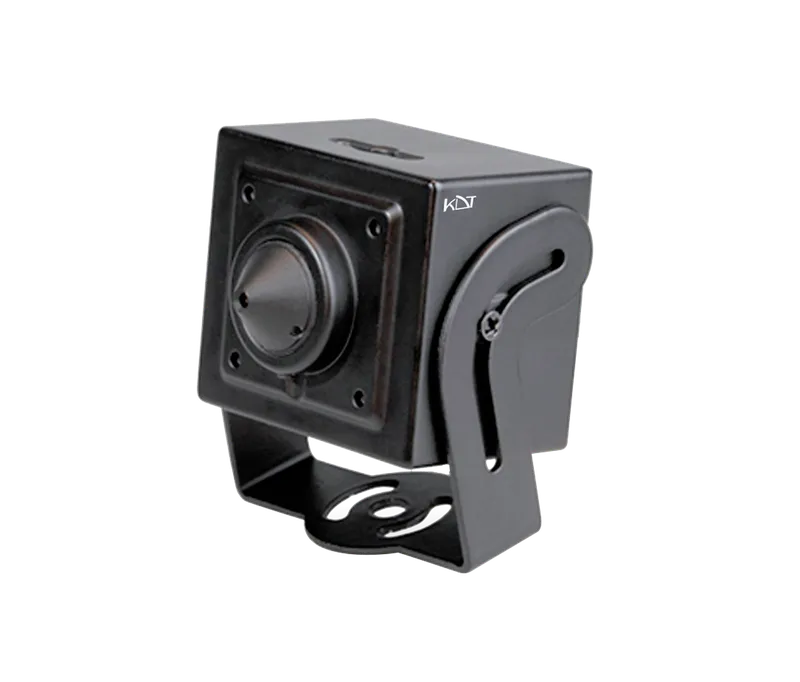 2MP PoE Pinhole CameraKI-P01LM20F-SM
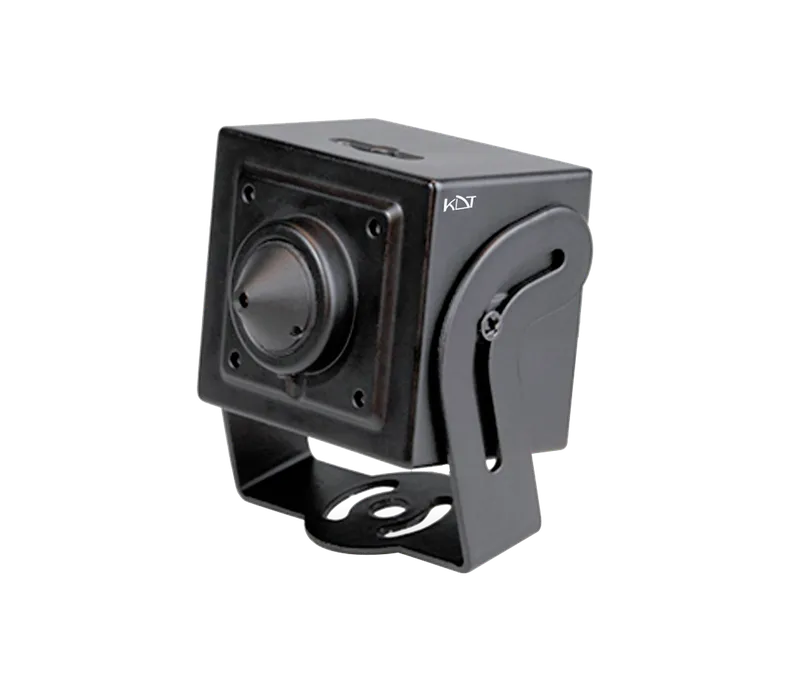 2MP Pinhole CameraKI-P00LM20F-SM
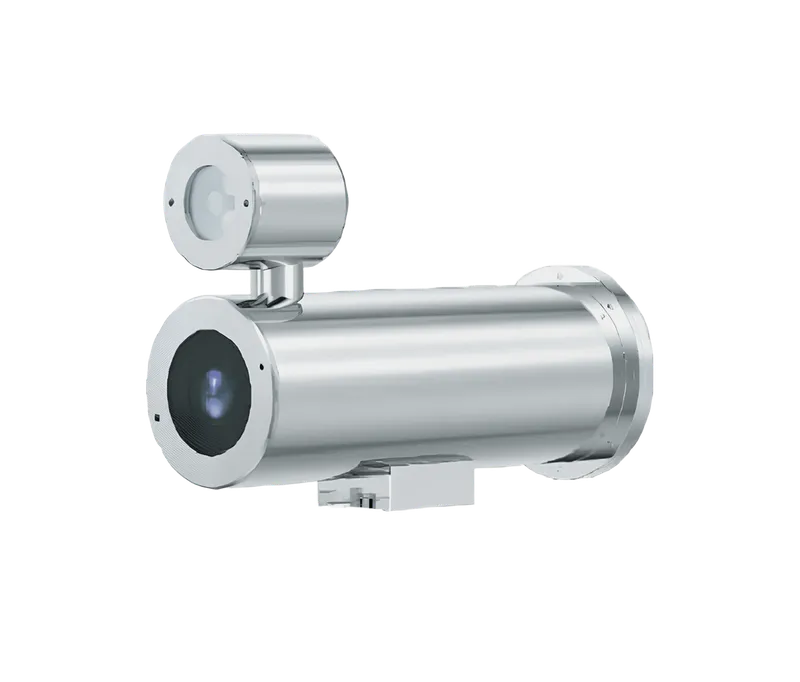 5MP Explosion-Proof Fixed Bullet CameraKI-AXZ103LM50F-i100
- 5MP Explosion-Proof Fixed Bullet CameraKI-AXZ103LM50F-i150
- 8MP Explosion-Proof Motorized Bullet CameraKI-AXZ103LM80A-i150
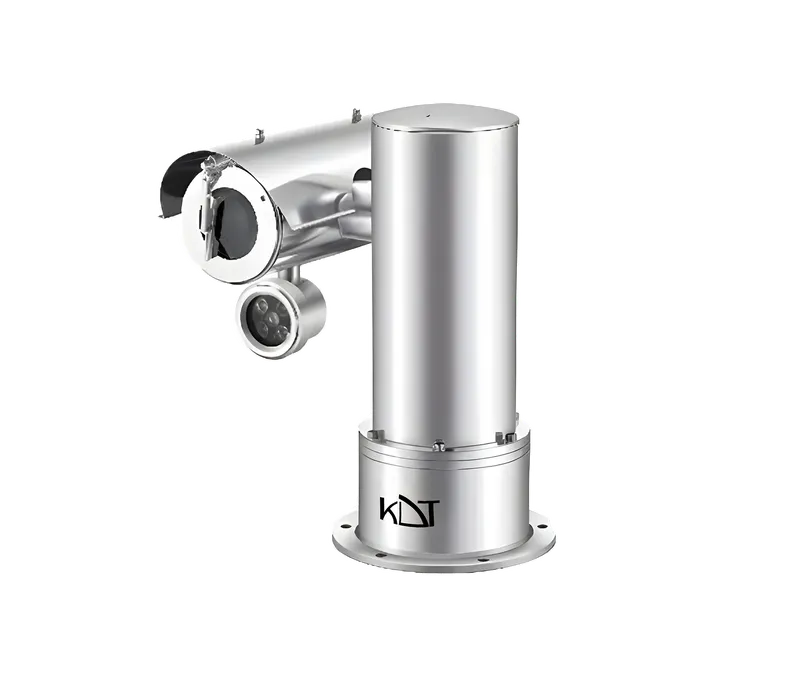 36X 2MP Explosion-Proof Network CameraKI-PTAX610LM20Z36-i500TSW
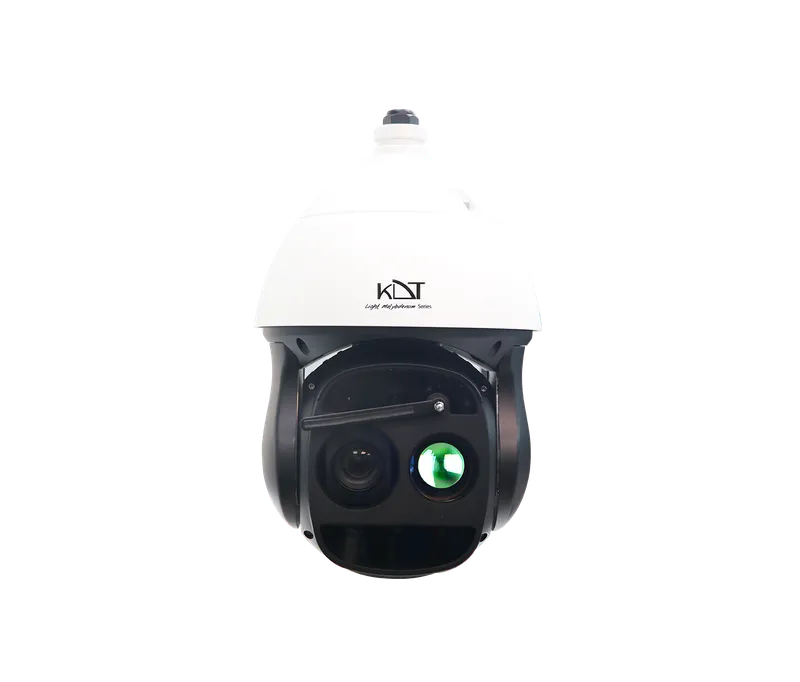 4MP 38X Laser IR Speed Dome CameraKI-S500LM40Z38-i600TSW
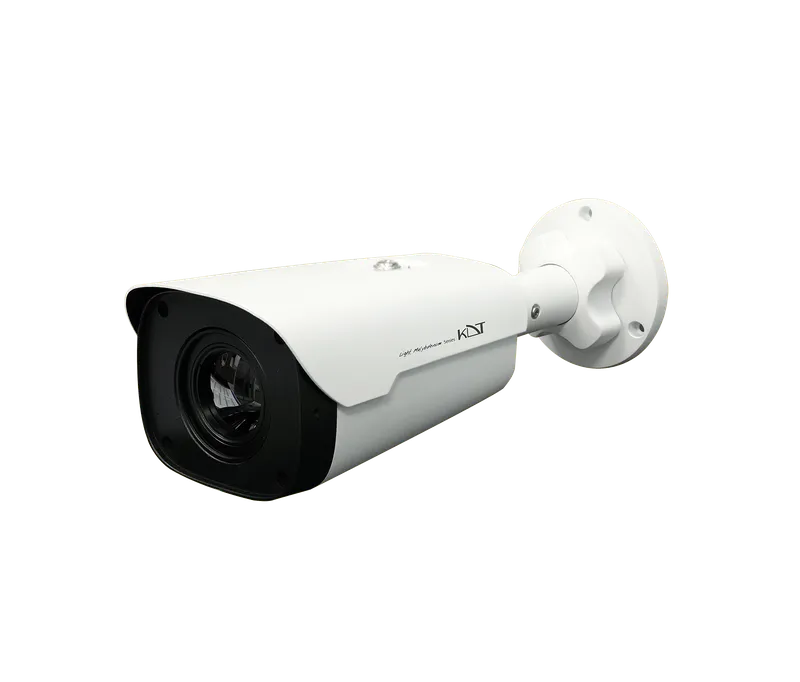 Thermal Bullet CameraKI-T37LM05F-S
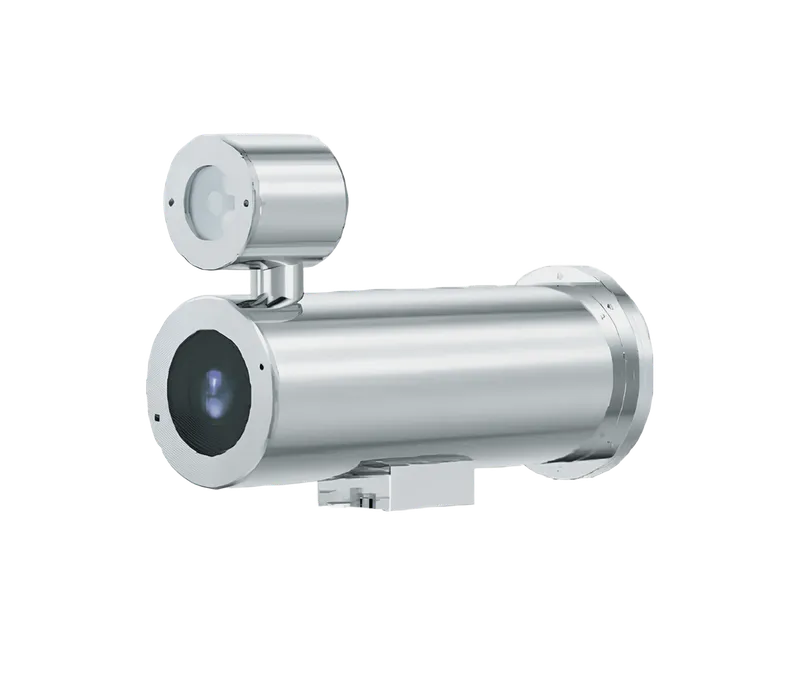 Explosion-proof HousingKX-AXZ103
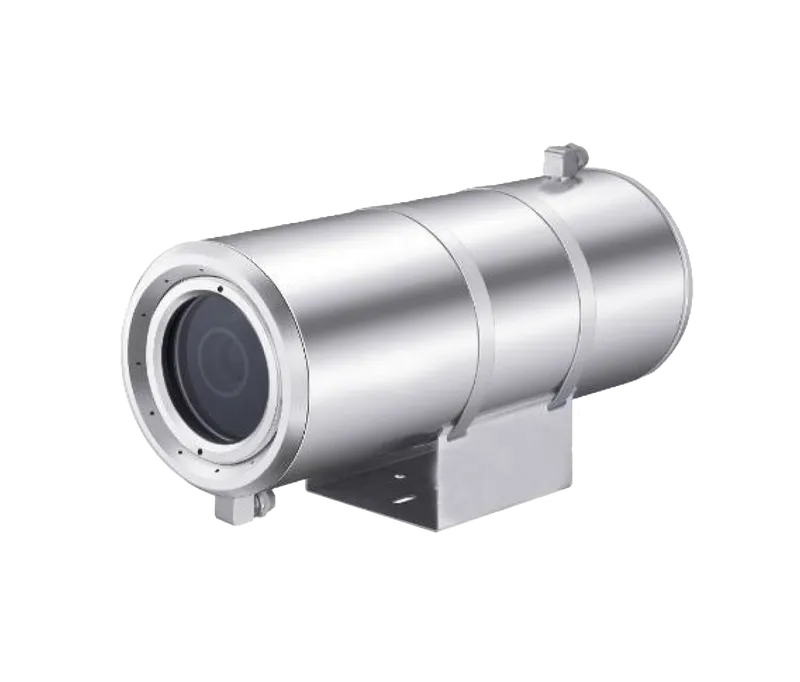 Explosion-proof HousingKX-AXWZ106
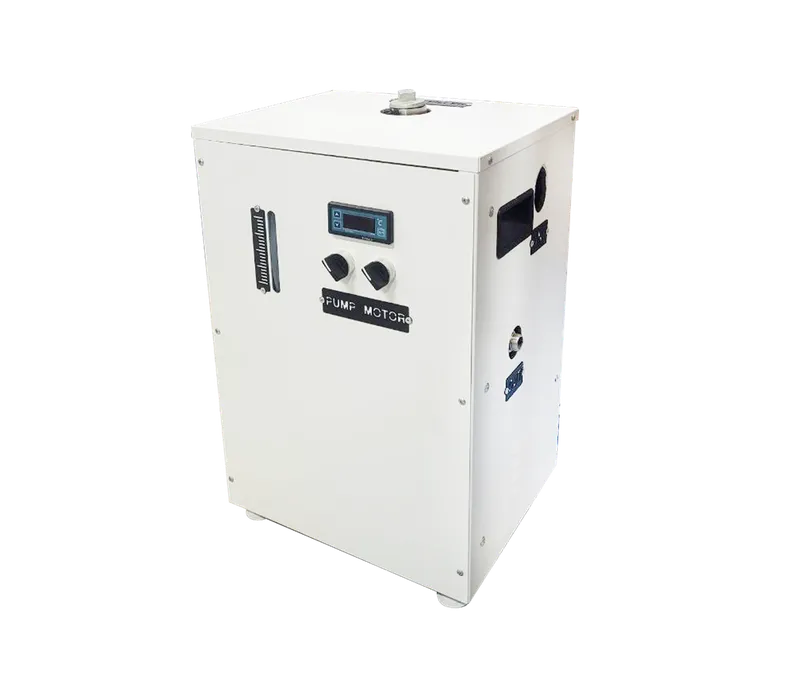 Cooling Water TankCWT-10L